Air pollution episodes: what are they and how do they occur?
Deep dive into the occurence and impacts of air pollution episodes
The air we breathe is primarily composed of nitrogen (78%) and oxygen (21%) gases, both essential for life. Alongside these, there are other gases (e.g. ozone, greenhouse gases) and particles (e.g. desert dust) present in much smaller concentrations.
Several of these compounds are considered to be air pollutants, as they can have detrimental effects on human health, animals, and the environment. Exposure to air pollutants, such as particulate matter (PM), ozone (O3), nitrogen dioxide (NO2), carbon monoxide (CO) and sulfur dioxide (SO2), can lead to health problems, depending on the pollutant concentration and length of exposure. These can range from irritation to the nose and throat, to more serious cardiovascular and respiratory problems, and even premature death.
According to the World Health Organisation (WHO), air pollution is one of the leading environmental risk factors globally. Its impact is particularly pronounced in urban areas, with an estimated 97% of the urban population exposed to fine particulate matter (PM2.5) concentrations that exceed the WHO recommended levels in 2021.
In order to address air pollution and take adequate action to protect citizens’ health, it is important to understand what air pollution episodes are, how they come about, and their potential impacts.
What are air pollution episodes and how do they occur?
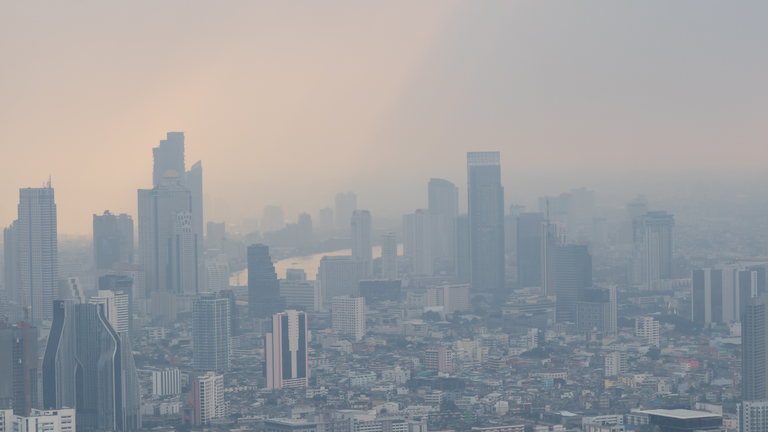
An air pollution episode refers to a prolonged period of time during which the air quality is poor over a specific geographical area. It involves a sudden and significant increase in the concentration of one or several air pollutants (such as PM2.5), exceeding the recommended levels. An episode can last from a few hours to several days or weeks, and can often be referred to as a smog episode. During severe air pollution events, visibility can also be reduced due to the high concentration of airborne particles, also referred to as haze.
Air pollution episodes occur when the meteorological conditions combined with unusually high pollutant emissions (from human activities or natural events, like dust storms) allow for pollutant concentrations to build up in the atmosphere. Certain temperature and weather conditions may “trap” these pollutants close to ground level and prevent them from dispersing, resulting in elevated and unhealthy concentrations.
For instance, in the summer, warm and sunny weather conditions can lead to elevated ozone levels when certain pollutants (e.g. nitrogen dioxide and hydrocarbons) react under the presence of sunlight. In winter, high levels of particulate matter and nitrogen oxides emitted by cars and other sources can build up over several days, as cooler air close to the ground becomes trapped under warmer air above (temperature inversion). Air pollution episodes can also involve the presence of a large quantity of particulate matter in the air due to dust storms, volcanic eruptions and other natural events.
What are the impacts?
Poor air quality during an air pollution episode can impact the health of both sensitive and healthy individuals, depending on its severity and duration. High concentrations of pollutants can irritate the airways and exacerbate respiratory problems, such as asthma, while long-term exposure can increase the risk of cardiovascular and other diseases. Sensitive groups, including the elderly, pregnant women, children and those with pre-existing health conditions, are particularly at risk and should limit exposure (e.g. avoid outdoor activities). Nevertheless, all individuals should take steps to protect their health during air pollution episodes.
Such episodes can also have detrimental effects on the environment, as they can damage vegetation, reduce biodiversity, and contaminate the soil and water. Additionally, they may result in economic consequences, as they can affect infrastructure (e.g. dust could decrease the efficacy of solar panels, while certain pollutants can damage buildings and monuments), and economic activities (e.g. air transport can be affected by volcanic activity, while higher hospitalisation rates are reported during air pollution episodes).
Given these impacts, it is crucial for measures to be in place to not only minimise the impact of air pollution episodes, but also reduce their occurrence.